

For millions of Americans, chronic back pain isn’t just a physical ailment; it is a thief. It steals the ability to play with grandchildren, the focus required for a productive workday, and the simple pleasure of a full night’s sleep.
Traditionally, patients were often told they had two choices: manage the pain with lifelong medication or undergo invasive surgery with lengthy recovery times.
However, the evolution of the spinal decompression machine has introduced a third, highly effective path that targets the root cause of disc-related pain without a single incision.
The Mechanics of Relief
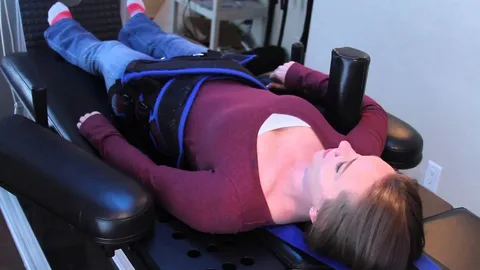
At its core, a spinal decompression machine is a sophisticated, computer-controlled medical device designed to relieve pressure on the spine. While it may look similar to a traction table, the technology behind it is vastly more advanced.
Traditional traction can sometimes trigger muscle spasms because the body naturally resists a steady, heavy pull.
Modern decompression therapy bypasses this “guarding reflex.” By using logarithmic curves and sensors, the machine identifies the exact point of muscular resistance and adjusts the tension accordingly. This allows the spine to be gently elongated, creating a vacuum effect—technically known as negative intradiscal pressure—within the spinal discs.
Why the “Vacuum Effect” Matters
When a disc is herniated or bulging, it often leaks internal fluid or protrudes into the spinal canal, pinching sensitive nerves. This is what causes the shooting pain of sciatica or the debilitating numbness in the extremities.
The negative pressure created by the spinal decompression machine serves two vital purposes:
- Retraction: It helps draw the bulging or herniated disc material back into the center of the disc.
- Rehydration: It facilitates the influx of oxygen, water, and nutrient-rich fluids into the disc, which are essential for natural healing.
The Rising Burden of Spinal Health in the U.S.
The demand for non-invasive solutions has never been higher, as back pain continues to be one of the most prevalent health crises in the United States. To understand the scale of the issue, consider these statistics:
- Economic Impact: According to the Health Policy Institute at Georgetown University, back pain is one of the leading reasons for missed workdays in the U.S., with back-related conditions resulting in more than 264 million lost workdays per year.
- The Chronic Struggle: Data from the Centers for Disease Control and Prevention (CDC) indicates that nearly 25% of U.S. adults reported experiencing low back pain in the past three months, highlighting a critical need for accessible, long-term restorative therapies rather than temporary pharmaceutical masks.
Primary Candidates for Decompression Therapy
While back pain is a broad category, the spinal decompression machine is specifically engineered to treat conditions involving disc integrity and nerve compression. Clinical applications commonly include:
- Herniated or Bulging Discs: Moving the disc away from the nerve root.
- Degenerative Disc Disease: Restoring disc height and promoting nutrient flow.
- Posterior Facet Syndrome: Addressing the wearing down of the joints in the back of the spinal bones.
- Sciatica: Relieving the pressure on the sciatic nerve that causes radiating leg pain.
- Spinal Stenosis: Providing symptomatic relief by creating more space within the spinal column.
- Failed Back Surgery Syndrome: Assisting patients who did not find relief through previous operative procedures.
What to Expect During Treatment
One of the most appealing aspects of using a spinal decompression machine is the patient experience itself. Unlike many physical therapies that can be strenuous or uncomfortable, decompression is frequently described as relaxing.
- The Setup: The patient remains fully clothed and is fitted with a specialized harness around the hips and lower rib cage.
- The Session: As the patient lies on the table, the computer-controlled system begins its precise cycles of stretching and relaxation.
- Duration: A typical session lasts between 20 to 30 minutes.
- Frequency: While some feel relief after a few visits, a full protocol usually spans several weeks to ensure the disc remains stabilized and hydrated.
Safety and Efficacy
The shift toward decompression is fueled by a growing segment of the population wary of the “opioid trap.” By addressing the mechanical cause of pain, patients can often reduce or eliminate their reliance on painkillers. Furthermore, the risk profile is remarkably low compared to surgery. There is no scarring, no risk of infection from an operating room, and zero “down time”—most patients go directly back to their daily routine immediately after their appointment.
Conclusion
The “wait and see” approach to back pain is being replaced by proactive, technology-driven care. The spinal decompression machine represents the intersection of biomechanical engineering and holistic healing. By creating the optimal environment for the spine to repair itself, this therapy offers more than just a reduction in pain—it offers a return to a lifestyle defined by movement rather than limitation. For those tired of the cycle of pills and temporary fixes, non-surgical decompression stands as a proven, scientific gateway to lasting spinal health.
